Monday, July 18, 2016

The Spectacle of Himachal

In the lap of the Himalayas lies the Godly state of Himachal Pradesh (literally meaning a land of snow) – a state that not only has most major Himalayan ranges passing through it, but also derives its name from the Himalayas (meaning a snowy abode). Amongst the many things that Himachal Pradesh is famous for – landscapes, temples, hot springs, perennial rivers, hill stations etc – the most important are the mountains, as they afford the region with not just its topography but also its climate and beauty. Mountains have a hypnotic quality about themselves. On one hand, their gigantic proportions, while mesmerizing, make us realise just how insignificantly small and frail we are. On the other hand, their unwavering stillness takes away the constant chattering of our mind, allowing us to pause and reflect upon the tranquility -  something absent in our hyper-connected lives otherwise. Bright blue skies, long winding roads, a crispy golden sun, green pastures, pristine flowing water and snow covered peaks make up the view across most of the state, offering a poetic rendition of the vivacity of nature.

Mcloeadganj

Quaint but not quiet
Our quest for the quaint and an unending desire to escape the hustle-bustle got us onto a flight from Mumbai to Chandigarh. An eight-hour drive (including halts for lunch and refreshments) on wide concrete roads followed by an ascend on narrow but still concrete roads brought us to our first destination – Mcloedganj, a tiny suburb of Dharamshala, which also happens to be the headquarter of the Tibetian government-in-exile. This wonderful drive ended in to a long traffic jam and a congregation of people at a junction of five lanes, quashing all hopes of quaint and hustle-free. It is only the next day that we realized that the junction – called main square – was the actually the centre of action at Mcloedganj (and probably represented the entire suburb as far as tourists were concerned).

To give you a sense of the place, if you were standing at the main square such that you were not facing any road, but facing the valley, then about a kilometer to your left would be the Tibetian Musem / Dalai Lama Temple, a similar distance to your right would be the Namgyal Monastery / St. John in the Wilderness Church, whereas about 2kms behind you would be the Bhagsu Nag waterfall. These are mostly the touristy places that you would visit in Mcloedganj. Other than that, most people hang out around the square to shop and eat.


The Shiva trilogy – Water, Food, and Substance
What most tourists do not cover are the most interesting things that Mcloedganj has to offer, and both involve a fair bit of hiking. The first is a small hike that starts at the Bhagsu temple – usually where the visit ends for most tourists. The Bhagsu temple has a pond whereby an underground spring delivers water from the melting glaciers. This is the main attraction for tourists as the pond is open for a people to dip in. Once you walk past this gory site (most men strip down to bare minimum clothing), you come across the beautiful Bhagsu waterfall. From here you can hike up either along the waterfall (in dry season) or along a paved trail to the top of the waterfall. There are a number of small eateries on the way, but the best one is at the top of the waterfall - a charming little place called Shiva Café.

Front view of the Shiva Cafe

Tuesday, July 29, 2014

The Great Indian Summer Tiger Trail - Part II - Jim Corbett National Park

Wildlife trips are never short of uncertainty, excitement and, at times, disappointments. Sometimes, however, uncertainty can turn the excitement in to a big disappointment even before the trip starts. While Ranthambore was an all boys escapade, Corbett was going to be a family trip. One fine morning, a few days before leaving for the trip, the missus called from office, and in a very low voice, informed that she would have to cancel the trip due to some last-minute commitment at work. After a lot of deliberation (and some persuasion) we finally decided that she would stay back and the rest of us would carry on with the trip (part of the reason behind this decision was that none of our bookings were refundable!!). This led to another problem though!! While the two couples and their kids were booked at Club Mahindra in Corbett, the missus and me had planned to stay at The Wild Crest which was around 5kms away from the Club Mahindra property.

As it turned out, this was not that big a problem after all. One, the couples were more than accommodative and hosted me at their place for a couple of nights; and two, I like having some space to myself. We had pre-booked our safaris through a gentleman who is supposedly well known for his knowledge and tracking skilss - Mr. Ramesh Suyal. I had read about him online and was really impressed with what people had to say about him; plus his charges were reasonable and in line with what the hotel and others had quoted. I had left the choice of the safari timings (morning/afternoon) and zones (there are five). He advised that we do mostly afternoon safaris as the chances of spotting are higher around evening, and that we focus on the Bijrani zone that has the maximum density (the best zone is Dhikala, however you cannot enter that zone unless you are staying in the Government-owned Forest Rest House there - highly recommended that you stay there; we couldnt as bookings are done well in advance and we were late). We ended up booking two morning safaris as we also had interests in birding and early morning would be the best time to spot these little beauties.

Tuesday, July 22, 2014

The Great Indian Summer Tiger Trail - Part I - Ranthambore National Park

This year was going to be an exciting summer. Not only had I planned my jungle trails in advance, I had not one but two jungle trips planned. One would imagine what a summer it was going to turn into with trips planned to two large Tiger abodes - The Ranthambore National Park and the Jim Corbett National Park.

Well, to be honest, the original plan was to go to the very famous Tadoba Tiger Reserve, however, do to unavailability of safari permits, we decided to go to The Ranthambore National Park. A tiger lover paradise, the Ranthambore National Park is one of the largest national parks in northern India. This approximately 400 sq km forest is said to have housed around 50 Tigers once, however, that number is lower now due to poaching - an activity witnessed in almost all big and small forests in our country. Not just the density of tigers, but this park is also known for housing some of the most ferocious wild cats, that have fancy names and even more interesting stories. For instance, one of most recited stories of this park is how Machali (T-16), the royal tigress, fought with a 14 foot long crocodile. And mind you, this is not the only story that you will hear about Machali or the tiger reverse.

This was our first group trip to a jungle; hitherto we had always booked private jeep safaris for the two-three of us friends. However, this time around we decided to join a group being led by one of our most trusted wild life travel arrangers - the guys at Junglelore. Over a long weekend, these guys were taking two groups of around 25 individuals each in a canter (roofless bus) for a group safari. While we were a little anxious and apprehensive in going along with so many people - for a number of reasons: a) it is simply inconvenient to take photographs with 20 other people trying to do the same, b) the canter is generally higher than a jeep and thus you cannot photograph the animal from the eye level, c) more people = more noise (or chaos), and d) we feared that not everyone may be interested in wildlife other than the tiger and that would spoil our chances of photographing birds. Thankfully, none of that was true and it was a fun group to be part of, with enough opportunities to photograph birds and animals alike. In fact, we think that these group trips are a good way to ensure that you can do multiple jungle trips in a season on a tight budget.

Saturday, January 25, 2014

OF Disappointments and Unfairness of Life

Disappointments have a special way of showing up just when you don't need them most. That is the first thought to cross my mind as I watched the train leave the platform. We were supposed to be on that train; however, we could only watch it with dismay from across the tracks. It was a holiday that we had been looking forward to for a very long time; I kept thinking as we dragged our bags back home. If only we had left five minutes earlier, if only there wasn't that much traffic on the road, if only the cabbie had taken a different road; if only...this hadn't happened to me.

Even if this had to happen, I wish it wouldn't have happened today. No!! how could we have missed THIS trip!! The mind wouldn't stop calling this unfair and curse life for being unjust at times. 'At times?!?!'...a second thought smirked its way in. 'Are you not lucky that life is unjust to you only at times. Don't you feel lucky to have so many things come so easily to you?' An image hurried across my mind.

Every time I passed through the market to pick to the missus, I saw this couple sit near a turning. Weary faced, probably in their 80s, this couple sat by the road selling petty things like combs & draw strings; things that don't cost more than 5-10 bucks and things that you would buy only occasionally. How much would they be making daily? 50-60 bucks? or 100 at best? I wonder how fair life would feel if at 80 you are to sit on the road daily to earn 100 bucks in an expensive city like Mumbai.


Sunday, September 9, 2012

A Wild Nesting (Wildernest) In Goa


"The real voyage of discovery consists not in seeking new landscapes, but in having new eyes."

- Marcel Proust (French Novelist and Author)


View of the valley en route to the resorts
Think of a holiday in Goa and the mind immediately renders images of  serene beaches, clear waters, cheap booze(!!), bike rides and wild parties. Never does one imagine hilly terrains, gushing waterfalls, winding roads and wild creatures. However, just like the country that the state resides in, Goa offers much diversity beyond beaches, booze and minerals. Owing to its location between Maharashtra and Karnataka a part of the Western Ghats passes through Goa, providing a biodiversity to the state.


Inside view of the cottages
View from the room
The Western Ghats frame the Eastern and Western borders of Goa, and stretch into Karnataka. Somewhere in the midst of these hills, on a road connecting the capital of Goa - Panaji - to Belgaum in Karnataka lie two secluded natural abodes - Swapnagandha & Wildernest. Nestled 700-800 metres above sea level, these eco friendly resorts are concealed by thick forest covers and offer beautiful views of the forest, valley and a couple of majestic waterfalls. Staying close to nature while offering all the comforts of modern living (except air conditioners) is the key attraction of these mostly word-of-mouth publicised resorts. Guests are logged in to mostly similar looking eco-friendly wooden cottages, with the difference being mostly the view offered from these cottages (one of our rooms had this magnificient view of a pair of 143 mtrs waterfall). While the cottages are eco friendly and made out of wood, they offer enough comfort and amenities for a good stay, with the only exception of an air conditioner.

Wednesday, June 27, 2012

How I (Nearly) Got Kissed By A Lion At Gir National Park

A Young Asiatic Male Lion From The Gir National Park
Asiatic Male Lion
It was a rather quite Saturday morning, our fourth day at the Gir National Park. While my earlier (and first) trip to the Gir National Park was just before the busy season ( in October of 2010, just before the Diwali holidays; read here for details), this time around we chose to go in the busiest season – the summer holidays – as it also  happens to be the best time to spot the wild cats. As it turned out, in the first three days, we had a fairly good amount of sighting of birds, lionesses and cubs, an old male lion and a cheetah!! Boy were we lucky or what?


But greedy as we humans are, we wanted to see a ‘Young Male Lion’ as we (my friend actually!!) weren’t satisfied with what we shot of the ‘Old Male Lion’ two days back. So we started our penultimate day with the usual chore of getting up at 3 and waiting in a queue since 4 in the morning outside Sinh Sadan (the forest department office where permits to enter to the Gir National Park are issued). Finally at 6:30am we managed to get our permits and stacked our tired selves (since were following this routine of standing in long queues twice a day for the last three days) in to the gypsy. We instructed our driver and guide that we had seen enough of most things and would only focus on spotting a ‘Young Male Lion’ in this trip. So they made some calls to find out where this dude was last seen and figured that he was probably somewhere near the end of our trail (each safari permit entitles you to visit one trail, and in one direction i.e. you cannot turn around or travel in the reverse direction, nor can you jump to any other trail).
Dancing Peacock
Dancing Peacock
A Pair of Bee-Eaters
A Pair of Green Bee-Eaters
A Lesser Flameback Woodpecker Feeding Its Little One
Lesser Flameback Woodpecker
Asian Paradise Flycatcher


A Cheetah Flees As It Sees Us
A Fleeing Cheetah
A Small Pride
A Pride of Lions


Thursday, November 10, 2011

Phi Phi Islands - Thailand's Lesser Known Paradise

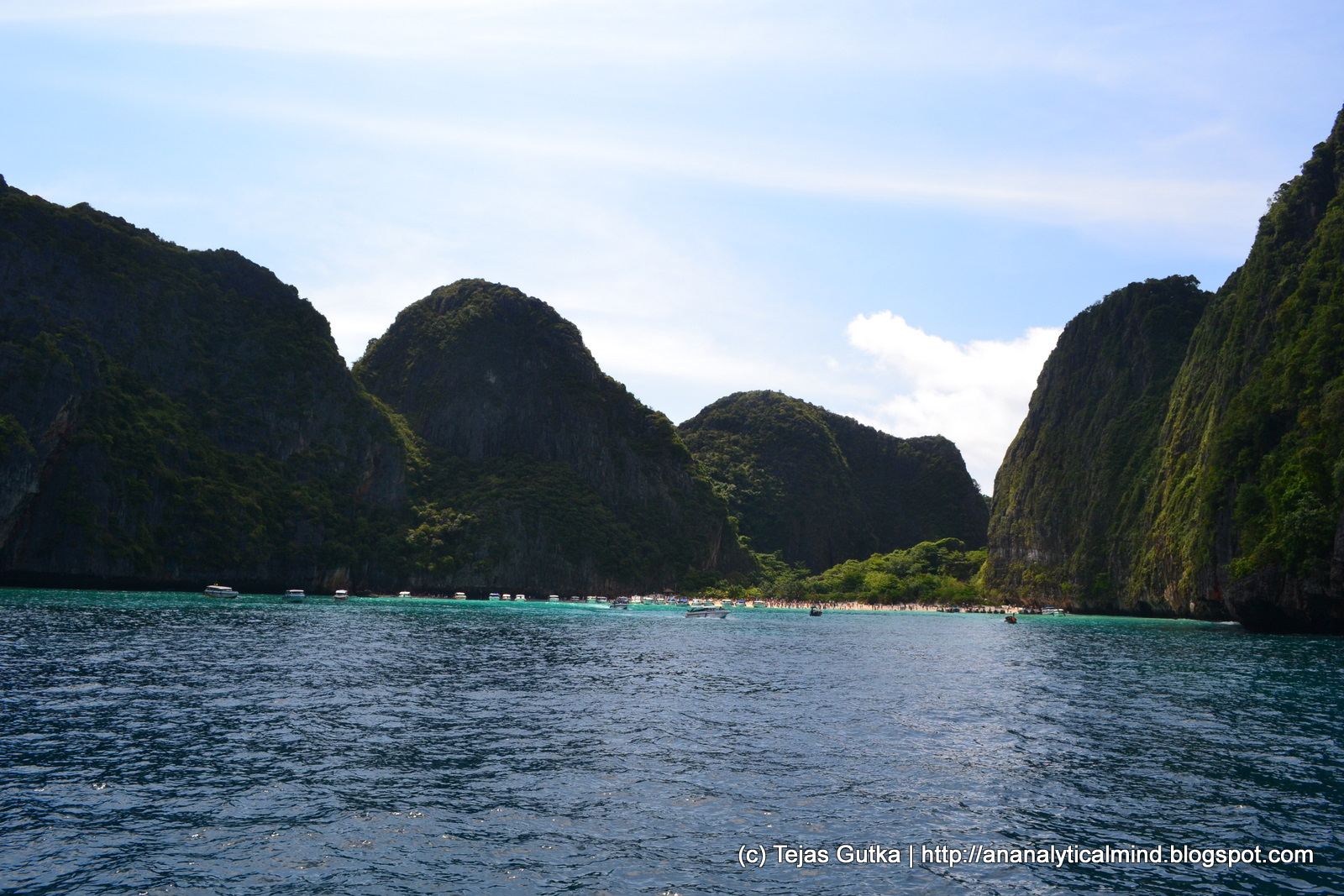
Located near the southern tip of Thailand in the Andaman sea- between Phuket and Krabi - is a pack of small, mostly uninhibited, islands. While each small islet has its own name (Bamboo Islands, Maya Bay, Monkey Islands, James Bond Islands - where the bond film The Man With The Golden Gun [1974, Roger Moore/Christopher Lee] was shot), the pack together is mostly referred to as Phi Phi Islands (locally called as Pi Pi Islands or Ko/Koh Pi Pi). Initially, these islands were frequented by only those seeking adventure and only in recent years have these come on the radar of general holidaymakers. The popularity of these islands can be gauged from the fact that most of them are unidentifiable on Google maps and are mostly visited by the general tourists as part of a one day boat trip. However, a few like us, are lucky enough to be knowing these jewels before planning our trips (we were told, rather insisted, by a couple friend of ours who had visited these islands as part of a day trip, and boy, are we thankful or what!!).


Phi Phi Leh
Phi Phi Don
The largest of the Phi Phi Islands (about 25-30 sq. kms!!) are two identical twins called Phi Phi Don and Phi Phi Leh. When being approached by boat, these islands look like fortresses, as they are covered on one side by tall limestone rocks. While Phi Phi Don is the only inhibited island of all the Phi Phi Islands, Phi Phi Leh houses the famous 'Maya Beach' where the movie The Beach [2000, Leonardo diCaprio] was shot and is thus a famous tourist attraction. Adventure enthusiasts can hook up with some local agencies who can arrange a tent and some food on the Maya Beach for an overnight stay. For regular holidayers wanting to stay, Phi Phi Don is the only option. Although still lesser known compared to destinations like Koh Samui, Phi Phi Don has a variety of hotels across all budgets for those seeking an overnight stay in this  heavenly abode. Like most other beaches in Thailand, these places are characterized by crystal clear waters and pristine white sands; what differentiates them from the regulars though is that these are relatively less crowded and more serene.


Maya Bay
The Beach @ Phi Phi Islands


Friday, July 8, 2011

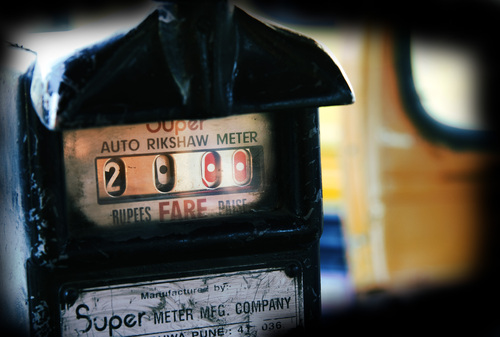
The Economics Of An Autorickshaw...

Photo Credit: http://photos.ibibo.com/photo/1420483/canon-d-autorickshaw-bangalore-india

Circa - Summer of 2006. We were on our way back from Inox Adlabs, Wadala after disappointedly watching The Da Vinci Code. A little ahead of the theatre, towards the highway, we crossed what was going to be my first work place after my MBA. That got us to discussing the vagaries of my travel to Credit Analysis & Research (CARE) Ltd, which was oddly located on the Eastern Express highway, a little before Chembur. Mayuri (fondly referred to as MJ), in her usual candid manner, poped out with a suggestion: “Teja, why don’t u consider buying an autorickshaw and leasing it? That way you can travel to and fro work for free, and also earn rentals!!” Laughter burst immediately, but little did any one think of the economics of MJ’s idea.

Back to 2011 – around the first rains of the season. There exists an unusual relation between rains, potholes and autorickshaws in Mumbai. Inadvertently, with each passing rain, the number of potholes in Mumbai increases at an exponential rate, no matter how often they are repaired. Similarly, one wild shower can cause most autorickshaws to breakdown, irrespective of its age. Surprisingly, no manufacturer has paid any attention to this crucial detail – maybe in next meeting I’ll point this out to them.

In case you are wondering if I have changed my mind about the blog title from ‘economics of…’ to ‘distress of…’ - not just yet; hang on. The reason I ramble about these issues that, had it been for them, then I would not have yet completely understood the economics of autorickshaws. So, getting back to the story, somewhere around the ascent of this year’s monsoon, I was stranded on my way home in a broken-down autorickshaw. Out of curiosity (an-analytical-mind, afterall!!), I initiated a conversation with the driver as to why these autorickshaws break down. As the downpour gained momentum, our conversation drifted from the problems to the finances, and revelations happened.

Being an analyst, I simply couldn’t resist the temptation of running the numbers on an excel sheet and calculating the IRR (Read more on IRR here).  While my first calculations stunned me, I later realised my folly. Nevertheless, I thought this would be an interesting post, and hence here it is. Lets first start with the assumptions:

Wednesday, May 4, 2011

The First Bird Watching Tale....

Its been a little over a year that I have taken liking to this new activity called bird-watching. Quite different from what it used to be in school days - this one takes you away from the urban centers into the less treaded paths – however, the excitement still remains the same. While one may argue how boring it is to be excited looking at birds rather than ‘chicks’, I’d say lets leave that discussion for a private meeting (after all my wife is usually the first one to read my blog!!).

Well, lets get back to the new hobby then. So, our (whats more fun than finding a company to bird-watch with!!) quest to watch the international beauties took us all the way up to the border of Rajasthan to a place called Bharatpur. Bharatpur is located on the Eastern border of Rajasthan, and lies between the Agra and Jaipur (although Agra is much closer, click here to veiw a map). In Bharatpur rests a less-known sanctuary called the Keoladeo National Park, commonly known as Bharatpur Bird Sanctuary (click here to view map).


The Keoladeo Temple at the heart of the park.
A World Heritage Site, the Keoladeo National Park is more than 200 years old, although it was recognized as a national park only in the latter half of the nineteenth century. For about hundred years prior to the recognition, this place was owned by the Maharajas of Bharatpur and was a famous hunting ground for them and the Brits. (As per official records, in one of the hunting expeditions, a British Governor hunted over 4000 birds in a single day - hard to believe, especially with the kind of rifles that had in those days!!). The park derives its name from the ancient Keoladeo Temple, devoted to lord Shiva, residing at the heart of the park.


Thursday, March 17, 2011

For the love of God, and Wildlife - II [Gir National Park / Wildlife Sanctuary]


The second part of our vacation was a trip to the Gir National Park / Wildlife Sanctuary in Gujarat. This was a rather unplanned trip as we had no idea as to how we were going to get to the Gir National Park from Palitana. The only thing planned for the trip was our place of stay – Hotel Anil Farm House.  With some asking around, we figured that there was no direct way to get to our second destination. Thus began our half day long road trip, starting at 5 in the morning with a cab from Palitana to Songadh, a 6 hour long bus ride from Songadh to Junagadh, and finally 3 hour (for a distance of 50 kms) auto ride from Junagadh to Sasan - the village around the Gir National Park. (click here to see the journey on a map). Normally, its much simpler to get to Gir from Mumbai – you either take an overnight train to Junagadh and then a bus (recommended over an auto-rickshaw) to Sasan or an early morning flight to Rajkot and then a cab/bus to Sasan.

Sasan, also known as Sasan-Gir, is the village near the Gir National Park and is located along the banks of the river Hiran. Most of the hotels in Gir are located in this village, and are thus along the bank of the river. While options are abundant from the Department of Forest’s Sinh Sadan to the Taj (which had been shut, but was to be restarted), there were two properties that we liked in particular and recommend to the budget traveller: (a) Hotel Anil Farm House and (b) Sinh Sadan. The latter is a property owned by the department of forest built in colonial British architecture, and is probably one of the cheapest properties around. Another reason why we like it so much is that no matter where you stay, you’ll have to come back Sinh Sadan for all your permits to enter the sanctuary, so then you might as well stay here – considering that you’d typically be entering the sanctuary at 6 in the morning.

Tuesday, December 7, 2010

For the love of God, and Wildlife


Planning a holiday can be quite a tedious task, especially when its a family affair. Parents like religious outings, wife wants to relax and enjoy the luxuries, and you like adventure - gosh, life can be so complicated with so many options. But then, as they say, where there is a will, there is a way.

I was in one such dilemma when I was planning my holidays during a recent annual leave. The idea was to accommodate it all - the pending family visit to the holy place, a quite & relaxing holiday and an encounter with wildlife. A little probing and some googl-ing a trip is planned to Gujarat: Mumbai - Palitana - Gir.


Traversing more than 2000 kms, this was probably one of the most exciting trips of my life. It was divided into two parts, with the first part - a weekend excursion - comprising of Mumbai - Palitana with parents and wifey. From Palitana, parents came back to Mumbai, while wifey and me carried on for a 5 day trip to Gir National Park - which was the second part of the trip. I'll talk about first part in this blog, and will follow it up with a blog on the other part later.

Wednesday, April 14, 2010

Who wants to be a millionaire?


Mumbai alone must have atleast ten recognised business schools, and each of these schools must be mentoring atleast a 120 student on an average, which means that each year Mumbai alone adds around 1200 MBAs to the country's job market. A similar number would be the number of engineers and doctors passing out each year. Add to this the CAs, lawyers, architects, and artists and you have around 5000-7000 students with a technical degree (other than a BCom/BSc/BA) passing out of various colleges and institutes in Mumbai. And what do all these people have in common? Well most, if not all, would have a dream to do something BIG in life! After-all, we've all been taught to dream and think big since childhood, haven't we? Strangely enough, no one ever bothered asking "how big is big enough?"

Tuesday, October 13, 2009

A Vacation Amongst Clouds; On Ground, In Air


About 110kms from the chaotic city of Mumbai, and 16kms form the crowded twin hill statsions of Lonavala & Khandala, lies a small town off the highway called Kamshet. While not as famous as the twin hills that precede it (considering you are travelling from Mumbai), Kamshet is a major paragliding destination in Maharashtra, often metaphored as the 'paraglider's paradise'. Surrounded by lakes, paddy (rice & sugarcane) fields and the beutiful mountains of the Western Ghats, Kamshet and its neaby villages offer an altitude of 2200ft above sea level and some of best landscapes one could capture.


The beauty of Kamshet lies about 200 feet above the town, a 13km journey, not easily traversable without one's own vehicle; and the village roads dont exactly make the drive joyful. However, once you cross around half the distance, and reach about half the elevation, the road will no longer be the focus of your mind - for your eyes shall be treated with some majestic views of the lush green fields outlined by lofty mountain ranges embellished with numerous waterfalls.

Saturday, April 25, 2009

Weekend Break: 45 Feet Above The Ground


Lonavala has long been a favorite monsoon getaway for most weekenders in Mumbai and Pune. Situated amongst the picturesque western ghats, over 600 meters above sea level, this hill station is known for its waterfalls, dams, a candy-like sweet called "chikki" and a private city called Amby Valley.

While I have always preferred a weekend getaway to quieter, less populated places, Lonavala has been an exception. Its not the love for chikki or the huge dam (infact I have not seen the dam in the ten years of my holidaying in Lonavala) that take me back to this crowded hill station; rather its a small village a little before the amby valley called Jambulne. A little known place, difficult to traverse to without your own vehicle, it is home to a 25 acre forest land owned by the friend of a close friend's father. The first time I visited this place - I probably was a ninenth grader and knew little about trekking and camping in forests - I was spellbound with the beauty and serenity of the then huge forest land.

From then to about a few years back, I have been to the place (better known amongst us friends as the 'Farm') atleast once every year. Having born in a month that experiences peak monsoon, I have been lucky enough to celebrate many a birthdays in this heavenly abode just the way I like it - aloof. Three small tin sheds - a kitchen, a bedroom, and a toilet - was the only human construction initially, covering over a couple of hundred sq feet of more than one million sq feet of land available. The simplicity and closeness to nature - no electricity, no gadgets just some solar powered lights - was the main attraction of the place. It made the tedious travel to the place a looked after event each year. We would pack our bags with ready-to-eat food before taking an early morning bus from Mumbai to Lonavala. Upon reaching Lonavala, the first task would be to head to the market and shop for food, water and beverages before queuing up for a 17km ride in the local trax on a share-a-seat basis. The jeeps (or sometimes trucks carrying rocks for construction) would drop us at a junction from where we would walk up 4kms to reach the farm.

Wednesday, March 11, 2009

The Bollywood Brass Band's Rahmania


An unusual song from an ususual take on an age hold hero - yes I am talking about the song Tauba Tera Jalwa from the movie Dev D - has been topping the charts recently. A song sung and played a brass band - the ones that usually play during weddings - is an interesting concept, but has got little attention compared to its novelty. All attention, and deserving so, has been focused on A. R. Rahman winning the Oscars. But just like the brass band, Rahman has had too little attention in the past. The musician is a true genius - probably the best the industry has - and has been making the nation proud for quite some time. From the usual bollywood tunes, to the patriotic vande matatram and Jaana Gaana Maana, to the musical Bombay Dreams, to chinese movie scores to the Lord of the Rings - he's played'em all.

So whats common between A. R. Rahman and the brass band? Why would one want to talk about a little know brass band and A . R. Rahman?

Thursday, December 4, 2008

Me Mumbaikar


Mumbai, the financial capital of India, has been in the news recently - for reasons quite appalling. The city has a habit of creating headlines and its people have acquainted themselves to move on despite all the negative news. From riots to bomb blasts to floods to gun and grenade attacks, the city has seen it all. Being born and brought up in such a city gives you the courage to face the worst of terrors and still continue living like nothing is wrong.
I have lived through the riots, swan across in the floods, experienced the bomb blasts and witnessed the gun attacks; but such incidents have neither deterred my love for the city nor the respect for its citizenry. But a recent incident has rocked my belief in the sanity of the city's populace.

Wednesday, November 26, 2008

THE UNNERVING DASVIDANYA


Bidding good-bye has never been an easy task. Especially when you have been associated with someone for over two years and it happens to be your first association. Over a week back, I was preparing myself for one such bid, and trust me I had never seen myself as nervous as then. When the final moment arrived, I was only a little better than speechless. Stumbling and stammering, I was hunting for words as if I was speaking some foreign language. And to make matters worse, the opposite having realised my plight and understood my motive was grinning mischievously. Phew!! I had never thought resigning from the job is such mountainous a task.

And why wouldn’t it be? A place that gave you your first shot at building your career, a place that trusted you when you were absolutely raw, fresh out of college, a place that gave you the much sought after ‘financial freedom’ would definitely be close to your heart. I have known a lot of people who have been able to absolutely detach themselves from their workplace, but that’s not the case with me. Agreed, I have never been the die-hard workaholic types nor have I ever sacrificed my holidays for that extra bit of work, I still hold my place of work in high regards. This is the place where I met some genuinely wonderful people in the form of bosses and colleagues, where I have learnt the art of analyzing businesses and where I had the opportunity to travel the length and breadth of the country.

Just like a coin has two sides, the going here has not always been as smooth as it may sound in my words. There have been tough times, there have been disappointments and there was also a lot of frustration. But, standing here today and looking back, there are enough fond memories to more than make up for the not so good experiences. As for the present, while I surely anticipate the new responsibilities at a new place, I surely feel bad for having decided to move on.

Thursday, November 13, 2008

Dear Diary


Curiosity is no strange an attribute to humans. The curiosity over an apple led to the discovery of gravity and sex!! Difficult to say which ones greater than the other but definitely more people are thankful for the latter than the former (had Adam not eaten the apple we wouldn't have been in existence!!). Anyways, allow me to trace the reason for this post.
A week back, someone having stumbled upon my blog called me an avid blogger - which made me think whether I really am one? Looking at the number of posts I write in a month I wouldn't call myself a blogger, forget being avid. So i thought maybe its not about how much I write but about how many people read what I write. Well, that number wasn't really encouraging either (check the counter on the bottom of the right panel). So then I started blog-browsing and realised that the most read or most updated blogs are the ones where people write about their daily lives and experiences.
Penning thoughts and experiences has been a practice of humans since time immemorial - a practice that created history, literally!!. But personal details have not been public except in autobiographies or until the recent internet era. For the kids born in the era of google, facebook and myspace making a public diary and peeping into other's such diaries is a common habit. As for me, blogging was always about penning thoughts, and just thoughts. I don't really appreciate someone peeping into my personal life so easily. Maybe that's why my earlier blog was not easily traceable (although I didn't write anything personal directly!!).
As for those wirting public diaries, I doubt the completeness or honesty of such posts (no offence meant). I wonder how much would their conscious allow them to write all that they felt to the public at large. Wouldnt their conscious act as an editor or a censor board and cut down on details? I am not blaming them of dishonestly but then we all have secrets to hide, right? Some blogs that i read did mention a lot of those secrets, but then the author's identity was not revealed there. So what fun would one derive in reading half-truths (i wanted to write half-facts, but I am not sure if that is an accpetable phrase)?
There is no clear answer to this question just as there is no right or wrong in penning a public diary. Its a matter of belief and mine doesn't allow me to pen diaries for the public (not like I pen one for myself). But one thing is for sure, by no means am I an avid blogger!! :)

I am no cynic, but sometimes I like to behave like one!!

Tuesday, October 28, 2008

Two Cold Feet....A Hundred Teary Eyes

Life is full of uncertainties; the worst being its end. What exists today may tomorrow be a thing of the past. Combine that with the human affinity for procrastination - especially when it comes to expressing your love or gratitude for someone - and the results would be nothing less than sheer regret.

One fine morning a beloved someone leaves as per his/her routine and instead of him/her coming back as scheduled, you receive the grim news of his/her demise. Or maybe, in the middle of the night you are woken up from deep slumber just to be told that a dear relative is no more. Alternately, you wait for the dear one at the airport only to realize that their body and soul were on flights to different destinations. Whatever the situation in which the news arrive, the outcome is the same. Suddenly your world comes to a stand-still. The conscious mind gives in to its subconscious  counterpart. Immediately upon taking over, the subconscious mind takes you through cycles of visuals from the past and of the future. Half nostalgic, half hysteric one juggles between responsibilities and emotions.

Directly or indirectly, I have witnessed such unfortunate situations many a times. I have always wondered what must be going through the minds of those at loss, until I lost someone close enough to find the answer. For the not-so-strong hearted, the thoughts are usually revolving around the memories of the gone while for the strong  hearted, the brains are already working on deciding the future course of actions. (They say you can never make up for the losses. True, but then you can’t even sit grieving for the loss because grief only brings more sorrow.) Whether you are the strong hearted or the not so strong hearted, there is one feeling that you just cannot overcome – the feeling of regret.

There is always a moment when those at a loss wonder, hope and pray that the deceased would have stayed on for a little longer. ‘I wish he would stayed until the so-and-so’s function at least’; ‘I wish he would have seen his new house before he went’ - we all have heard such statements being made at funerals. But what remains unsaid, and to my mind what is the most important, is that regret of not having expressed enough to the deceased. The desire to or even the actual actions of expressing one’s love and gratitude towards the deceased is the most painful sight to see. ‘Why did you leave me alone, what will I do with out you, please take me along’ – such statements have always broken me down. I have always pondered over the possibility of the cold lifeless body coming back to life and giving a warm consoling hug to the ones at loss – just for a moment. There would be so much to say…………….the heart would be so much lighter……..for I think its not just loss but sudden loss that makes the process so much more painful.


||सौ ख़त लिखे हैं तुम्हे,

पर लिफाफे पे लिखने को पता नहीं;
हर पल धुन्धती हैं नज़रें तुम्हें,
पर तुम्हारे तो साए भी नहीं दीखते कहीं;
तुम्हारी यादों में भीग जाती हैं पलकें,
पर इन आसुओंको रोकने वाला ही नहीं||
- Tejas Gutka

Wednesday, October 8, 2008

Today.....at the cost of tomorrow.....

India has moved from being a long time under-developed country to a developing one. The journey now advances towards the more sought after status of a developed country. Dreams are big - and so they should be. But the biggest of the dreams are fruitful only if they are backed by a determined action plan. Economically speaking, higher spend on infrastructure, higher conversion of savings into investments, promoting education, creating opportunities and an open economy are the actions that will convert India’s dream of development into a reality.

Unfortunately, a major deterring force called politics stands between India’s dreams and reality. There is no denial that the both, the present and the past governments, have given a fillip to the infrastructure development of the country. However, there are various issues that stand as hindrances when it comes to infrastructure development. Those familiar with the news would know that land acquisition is one of the major hurdles that come in the way of development. Various projects approved by the center are stuck because of opposition from locals (who are ofcourse backed by their MPs/MLAs) either on environmental grounds or for higher compensation. Corruption and bribery further deter the quality of the work and whatever development takes place is for a short period. The bureaucrats, just before and election, will polish the roads and prvide water supply, and once the elections are done water can only be seen in the potholes on the road. Take any major highway/road/lane in Mumbai and you can bet your life that there will be more potholes on any given stretch than its length. Someone put it very aptly by saying “yeh mumbai hain…yahan pe kabhi sadak pe gadde milte hain..to kabhi gadde mein sadak”. The financial capital of our country, the Shanghai of India, has some of the worst roads than any of its metros.

Its not just bad roads that the country has to mend, there is another problem of similar scale about which very little could be done. The problem is that of the turmoil in the global financial markets. One news channel says, when the US sneezes, India falls sick. Very True. Just when Indians started leaving behind the memories of the dot-com busts and the various stock market scams, and we saw a higher conversion of savings into investments, the stock markets the world over have crashed. To make things worse, the real estate markets have also crashed in tandem, thus leaving very little scope for investment for the Indian Households. Add to that the various IPO scams and the sentiments are pushed further into the negative territories.

It is said that the Indian investors are not a very educated lot and driven more by sentiments than by logic. True, but not surprising. On the one hand, vote-seekers propagate the need for free education; on the other hand, the cost of education is rising leaps and bounds. Education, today, stands to be one of the very attractive investment avenues; and its takes no rocket-science in relating the attractiveness of a sector for investments to its profitability. Thus the sector has shed its social image and donned a corporate look. So what so the policy-makers do to overcome the problem of low-education? Well, they reserve seats for the SCs/STs up to higher education and push for such reservation in the corporate sector as well. All in the name of giving opportunities to the socially backward classes. Now, is a socially backward student wanted to study and had the ability to do well, he could have done so in his earlier years of education when he had the same reservations. If, inspite of backing his form school to college, he had failed to be competitive, why would you want to push him further into higher education and work-place. Anyways providing employment to educated youths is a problem and we add to it by pushing the non-performers just because they belong to some under-privileged caste. It is evident that all this is done merely for votes and there are no benevolent intentions here.

Most of the solutions to all problems have been short-term – all for the purpose of garnering votes and winning elections. Bureaucracy, corruption and a laid-back attitude have held the economy from growing as well as opening up. Inferior quality of work, delays and regulatory confusion have only added to the problems of the country. Most long term issues have been handled with a short term solution. We have managed to save our today, but at the cost of our tomorrow.

The problem, however, is not just that of an inefficient system, it is also that of an ignorant population.